
Aluminium. It’s the backbone of modern Australian architecture – strong, sleek, low-maintenance, and perfect for our sun-drenched lifestyle and coastal breezes. But that incredible strength and durability come with a catch: aluminium loves to conduct heat. In a country with climate zones ranging from tropical humidity to chilly alpine winters, uncontrolled heat transfer through windows means discomfort and soaring energy bills. This is where the critical pairing of thermal break window technology and double glazing transforms aluminium from a potential thermal weak point into a high-performance hero for your Australian home. Let’s bust the myth of “thermal break vs double glazing” and show why they are inseparable partners for comfort and efficiency down under.
Article Index
The Core Challenge: Aluminium’s Thermal Conductivity
Raw aluminium acts like a superhighway for heat. In a Cairns summer, blazing heat readily conducts inward through the frame. In a Melbourne winter, precious warmth escapes outwards. This leads to:
- Sky-High Energy Bills: Air conditioners and heaters working overtime to compensate.
- Uncomfortable Living: Hot spots near windows in summer, chilly drafts and cold surfaces in winter.
- Condensation & Mould: Warm, moist indoor air hitting a cold frame surface causes condensation – a common issue in cooler southern states, leading to potential mould and damage.
- Reduced Effectiveness of Insulation: Windows become the weak link in your home’s thermal envelope.
Double Glazing: Tackling the Glass (Especially for Aussie Heat!)
Double glazing is your first defence against heat transfer through the glass. It uses two panes separated by a spacer, creating a sealed gap filled with air or inert gas (argon).
- How it Works for AU: The gap dramatically slows heat flow. Importantly, Low-E (Low-Emissivity) coatings are the game-changer for Australia. They reflect radiant heat – bouncing the fierce summer sun’s heat out while still letting light in. In winter, they reflect interior warmth back in. Gas fills (argon) further enhance this barrier.
- Aluminium Benefit: Aluminium’s strength allows for large, slimline windows and doors maximising views and natural light, even supporting heavy double-glazed units – perfect for our love of indoor-outdoor living.
- Limitation: Double glazing only tackles the glass. The aluminium frame remains a direct thermal bridge, conducting heat freely and undermining the glazing’s performance.
Thermal Break Technology: Solving the Aussie Frame Problem
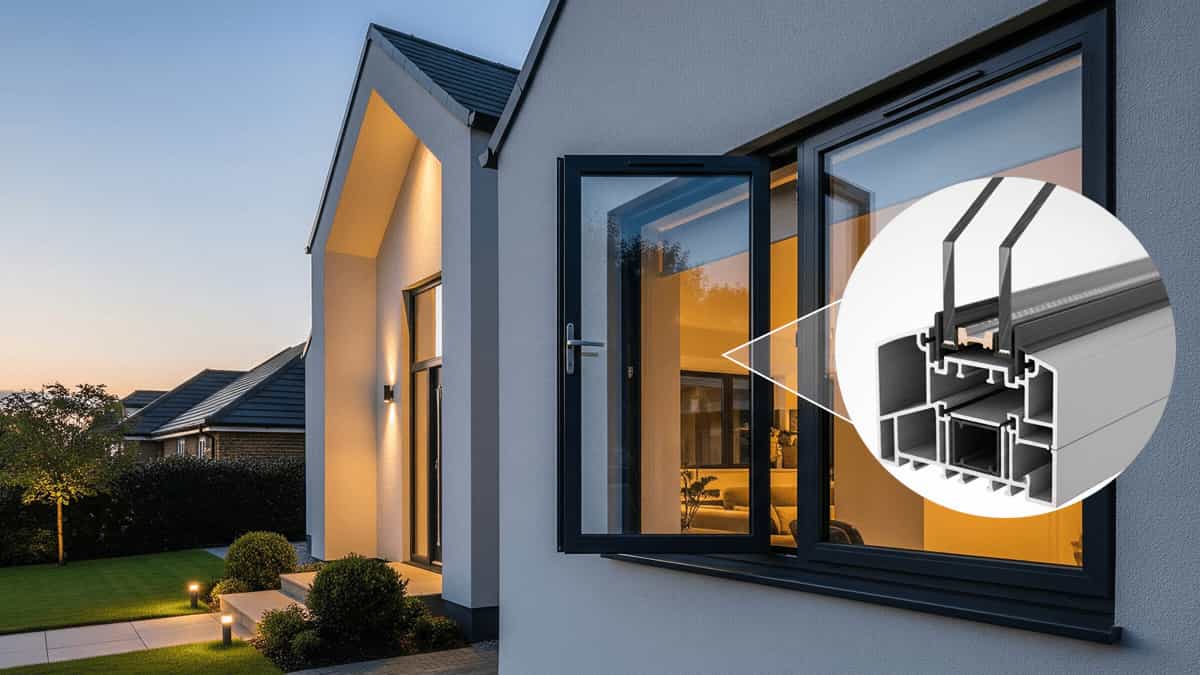
This is where thermal break technology revolutionises aluminium for Australian conditions. A thermal break is a highly engineered, non-conductive polyamide barrier inserted inside the aluminium profile, physically separating the interior and exterior metal.
- How it Works: Imagine slicing the aluminium frame and inserting a strong plastic insulator. This breaks the direct metal pathway. Heat struggles to cross this barrier.
- The Aluminium Advantage: You keep all the benefits – coastal corrosion resistance, bushfire resilience (when rated), design flexibility, slim profiles, durability, and recyclability – while dramatically boosting thermal performance. Modern thermal breaks are incredibly strong, ensuring structural integrity.
- Key Outcome for AU: The interior frame surface stays much closer to your indoor air temperature. This drastically reduces heat gain in summer, heat loss in winter, and minimises condensation risk on the frame (vital in humid and cool zones).
Thermal Break Windows vs. Double Glazing? It’s Not a Choice, It’s Essential Synergy for Australia.
Asking “which one?” is like asking if you need both tyres on your ute. For true performance and compliance in Australia, you need both:
- Non-Thermal Break Aluminium + Double Glazing: Looks good, strong, better than single glazing. BUT, the frame remains a massive thermal bridge. In summer, the hot frame radiates heat inside. In winter, it sucks warmth out. Condensation is likely in cooler areas. This combo often struggles to meet modern Australian energy efficiency standards (NatHERS, BASIX, etc.).
- Thermal Break Aluminium + Single Glazing: Solves the frame conduction, but the single pane is useless against radiant heat (summer sun) and conductive heat loss (winter). Energy efficiency is poor, and comfort is compromised.
- Thermal Break Aluminium + Double Glazing (with Low-E):This is the Australian Performance Standard. The thermal break stops frame conduction, while the double glazing (especially Low-E coated for our climate) tackles radiant heat and conductive heat through the glass. Together, they create a comprehensive thermal barrier essential for our varied conditions:
- Achieves Low U-Values: Essential for meeting NatHERS star ratings and BASIX requirements across all states.
- Slash Energy Bills: Dramatically reduces cooling costs (dominates most of AU) and heating costs (southern states).
- Superior Year-Round Comfort: Eliminates hot spots and radiant heat gain in summer, reduces cold drafts and radiant heat loss in winter.
- Minimise Condensation: Warmer interior frame surfaces significantly reduce condensation risk, protecting your home in humid and cold climates.
- Sustainability: Lower energy use = lower carbon footprint. Aluminium is 100% recyclable – a key Australian priority.
- Design Freedom: Maintains the slim, modern aesthetic Australians love, suitable for all home styles from heritage to ultra-contemporary.
Why This Duo is Non-Negotiable Across Australian Climate Zones
Australia’s diverse climate demands smart solutions. Here’s why thermal break aluminium + double glazing is essential in every zone:
- Hot Humid Summer (Zone 1: QLD NT, N. WA):
- Challenge: Intense heat, humidity, high cooling costs. Condensation risk from AC hitting hot frames.
- Duo Solution: Thermal break prevents frame heat ingress. Double glazing with solar control Low-E reflects massive radiant heat gain. Keeps interiors cooler, slashes AC bills, improves comfort. Reduces condensation on frames.
- Warm Temperate (Zone 2: Coastal NSW, QLD, WA, SA):
- Challenge: Significant summer heat gain, mild but noticeable winter heat loss near the coast. Moderate cooling/heating needs.
- Duo Solution: Balances summer heat rejection (Low-E glazing) with winter heat retention. Thermal break ensures the frame isn’t a weak point year-round. Provides comfort without constant HVAC use.
- Cool Temperate (Zone 3: VIC, TAS, S. SA, S. WA, ACT, NSW Tablelands):
- Challenge: Cold winters requiring significant heating. Potential for condensation and mould. Moderate summer heat gain.
- Duo Solution: Thermal break is critical to prevent major heat loss through the frame and minimise condensation. Double glazing (often with a warm-edge spacer and argon gas) provides strong insulation against winter cold. Low-E also helps retain winter heat. Significant heating cost savings.
- Hot Dry Summer, Cool Winter (Zone 4: Arid Interior – WA, SA, NT, NSW, QLD):
- Challenge: Extreme temperature swings – scorching days, cold nights. High solar gain. Dust.
- Duo Solution: Thermal break buffers extreme temperature transfer through the frame. Double glazing with solar control Low-E manages intense daytime heat gain while providing insulation against cool nights. Improves comfort dramatically during temperature swings.
Practical Considerations for Australian Homeowners & Builders:
- NatHERS/BASIX is Your Guide: These energy rating schemes dictate the required thermal performance (U-Value and SHGC – Solar Heat Gain Coefficient). Thermal break aluminium + high-performance double glazing is almost always necessary to achieve the required 6-star (or higher) NatHERS rating cost-effectively.
- Glazing is Key for Climate: Specify the right Low-E coating:
- Solar Control Low-E (High SHGC Blocking): Prioritised for most of Australia (Zones 1,2,4) to reject summer heat. Often has a slight tint.
- Thermally Insulating Low-E (Low U-Value): Prioritised for colder Zone 3, focuses on retaining winter heat. Usually clearer.
- Tinted/Toned Glass: Can further reduce heat gain and glare but reduces visible light. Discuss options with your supplier.
- Quality & Certification: Insist on:
- Robust Thermal Breaks: Adequate width (e.g., 24mm+ is common for high performance).
- Appropriate Low-E & Gas Fill: Matched to your primary climate challenge.
- Compliance: Products should meet Australian Standards (AS 2047 for windows). Check WERS (Window Energy Rating Scheme) ratings for independent performance data.
- Bushfire & Cyclone Ratings: Ensure products meet the required BAL (Bushfire Attack Level) or cyclone rating for your location if applicable. Thermal break systems are available in high-rated products.
- Professional Installation: Critical! Poor installation creates gaps and thermal bridges, negating the performance of the window itself. Use licensed and experienced installers.
- Cost vs. Value (Aussie Context): Yes, it’s a higher upfront investment than basic aluminium or single glazing. However:
- Energy Savings: Rapidly offset by significantly reduced cooling/heating bills – especially with rising energy costs.
- Comfort & Health: Priceless year-round comfort and reduced condensation/mould risk.
- Home Value: Increases property appeal and value through better performance and modern standards.
- Durability: Aluminium lasts decades, making it a long-term investment.
The Verdict: The Smart, Australian Choice
For aluminium windows and doors to deliver true comfort, efficiency, and compliance in the Australian context, specifying both thermal break technology and high-performance double glazing isn’t optional – it’s fundamental. They work hand-in-hand to overcome aluminium’s conductivity, making it the superior choice for our harsh and varied climate.
Whether you’re battling the tropical humidity of Darwin, the coastal heat of Sydney, the chilly winters of Melbourne, or the desert extremes of the outback, this powerful duo delivers. It unlocks aluminium’s full potential: providing the strength, corrosion resistance, sleek aesthetics, and low maintenance Australians demand, while finally delivering the thermal performance essential for modern, comfortable, and energy-efficient homes.
When choosing aluminium windows, don’t settle for just “double glazing.” Demand thermally broken aluminium frames paired with climate-appropriate double glazing (featuring Low-E coatings). It’s the intelligent investment for a more comfortable, sustainable, and cost-effective Australian home, season after season.